If you watch college basketball at all, you know the genius the is Gus Johnson. Simply put, nobody puts more excitement into a game than him (even Big Game Brent Musburger, who is still my choice for college football). He had the call of yesterday's Marquette/Georgetown game, which was a last-second thriller that came down to overtime.
Complete your quiz from the start of the weekend? Put down your pencil and paper, and time to grade yourself (clean up afterwards, please)...
Lakers legend and terrible talk show host Magic Johnson ($4,600 & $2,300): Hillary Clinton & Barack Obama
Boxing promoter and convicted manslaughterer Don King ($4,600): Barack Obama
Zen coach Phil Jackson ($2,300 - typo in amount from original): Barack Obama
Equine-featured Hall of Fame QB John Elway ($2,300): Rudy Giuliani
The Round Mound of Rebound Charles Barkley ($2,ooo): John Edwards
Tennis icon Martina Navratilova ($1,000): John Edwards
Tennis legend and FOE (Friend of Elton) Billie Jean King ($4,600): Hillary Clinton
Cleveland Indians reliever JD Martin ($2,000): Chris Dodd
Pasty Celtics great Danny Ainge ($2,300): Mitt Romney
NFL Commissioner Roger Goodell ($2,300): John McCain
HBO boxing mouthpiece Larry Merchant ($2,300): Hillary Clinton
Pine tar enthusiast (and hemorrhoids sufferer) George Brett ($2,300): Mitt Romney
NBA Star and walking injury risk Grant Hill ($2,300): Barack Obama
NASCAR superstar Jeff Gordon ($2,300): Rudy Giuliani
AL MVP Alex Rodriguez ($2,300): Rudy Giuliani
New York Knick and lover of interns Stephon Marbury ($4,600): Barack Obama
Stiff Oakland Raiders and Arizona St. QB Andrew Walter ($500): Mike Huckabee
The Real Home Run King Hank Aaron ($2,300): Hillary Clinton
Warriors point guard and burly beard man Baron Davis ($2,300): Barack Obama
NFL MVP and advertiser's wet dream Peyton Manning ($2,300): Fred Thompson
Noted French-Canadian Mario Lemieux ($2,300): Hillary Clinton (interesting note: he also donated to the Senate campaign of right-winger Rick Santorum in 2000 - maybe as a Canadian he doesn't understand the whole American political system)
Navy man Roger Staubach ($2,300): John McCain
NBA Commissioner David Stern ($4,600): Hillary Clinton
Cubs first baseman (who is not better than Albert Pujols, Chicago fan) Derrek Lee ($9,200): Barack Obama
...and for the bonus question: Deadspin.com's Will Leitch donated $250 to Barack Obama. Hey, every little bit helps!
Any surprises for you? I was a little disappointed that Vin Scully donated to Romney. And Mario Lemieux donated to both Hillary and Santorum - that's sort of like supporting the Allies and Axis in WWII.
Here's a fun game, based on research I did with the Federal Elections Commission (and with the help of the archives of Newsmeat.com): I'll give you a player/sports figure and amount donated to a 2008 Presidential Election campaign, you tell me who the donation went to. Your campaign choices are:
Hillary Clinton; Chris Dodd; John Edwards; Rudy Giuliani; Mike Huckabee; John McCain; Barack Obama; Mitt Romney; Fred Thompson
If you see more than one dollar figure, that means that sports figure donated to two campaigns!
Ready to play? Post your guesses in the comments section. NO FAIR CHEATING! Winner gets some sort of fabulous prize (to be determined later).
Lakers legend and terrible talk show host Magic Johnson ($4,600 & $2,300):
Boxing promoter and convicted manslaughterer Don King ($4,600):
Zen coach Phil Jackson ($4,600):
Equine-featured Hall of Fame QB John Elway ($2,300):
The Round Mound of Rebound Charles Barkley ($2,ooo):
Tennis icon Martina Navratilova ($1,000):
Tennis legend and FOE (Friend of Elton) Billie Jean King ($4,600):
Cleveland Indians reliever JD Martin ($2,000):
Pasty Celtics great Danny Ainge ($2,300):
NFL Commissioner Roger Goodell ($2,300):
HBO boxing mouthpiece Larry Merchant ($2,300):
Pine tar enthusiast (and hemorrhoids sufferer) George Brett ($2,300):
NBA Star and walking injury risk Grant Hill ($2,300):
NASCAR superstar Jeff Gordon ($2,300):
AL MVP Alex Rodriguez ($2,300):
New York Knick and lover of interns Stephon Marbury ($4,600):
Stiff Oakland Raiders and Arizona St. QB Andrew Walter ($500):
The Real Home Run King Hank Aaron ($2,300):
Warriors point guard and burly beard man Baron Davis ($2,300):
NFL MVP and advertiser's wet dream Peyton Manning ($2,300):
Noted French-Canadian Mario Lemiuex ($2,300):
Navy man Roger Staubach ($2,300):
NBA Commissioner David Stern ($4,600):
Cubs first baseman (who is not better than Albert Pujols, Chicago fan) Derrek Lee ($9,200):
Dodgers announcing legend Vin Scully ($2,100):
BONUS QUESTION: Which Presidential candidate did Deadspin's Will Leitch contribute to, and for what amount?
Is there anything better than ESPN signing Bob Knight to be part of their NCAA tournament coverage? No, no there isn't. You might remember that ESPN is where Coach Knight went for his one interview after getting fired from Indiana. It didn't go to well, as he wound up getting into a pissing match with interviewer Jeremy Schaap and storming off the set.
You really can't blame Mayweather - he's pretty much made for this sort of activity, and it's a ton of free publicity for his upcoming rematch against Oscar De La Hoya. And by "free" I mean "getting paid $20 million." It's a better version of "free" than getting a "free" Rhapsody download with an upsize combo at Wendy's.
Of course, when you think boxing and wrestling coming together, there's one thing that comes to mind: Rocky Balboa vs. Thunderlips in Rocky III. Certainly Hulk Hogan's best cinematic work, with Santa with Muscles coming in a close second:
I don't know about you, but when I'm feeling sick, nothing picks me up more than a Leroy Neiman sighting...
Now, this isn't the first time that real life boxers have mixed it up with "fake" wrestlers in forms of cross-promotion. Even The Greatest "lowered" himself to taking on wrestlers, not once but twice. The first was against the legendary Gorilla Monsoon, where he got involved in a match after watching at ringside. Needless to say, Ali does not fare well against the big bruiser:
This was all part of the build-up to Ali's match against Japanese wrestler Antonio Inoki. Was it worked (i.e. fake) or shoot (real)? If it was worked, then it was made to be terribly, terribly boring. Rules were set and then changed at the last minute that limited Inoki's abilities to grapple or kick. So he basically just took on a crab-like position on his back and kicked a bit for 15 rounds, while Ali refused to get close enough to land a punch. Theater at its most absurd:
Part of the undercard to the fight was Andre the Giant vs. "The Bayonne Bleeder" Chuck Wepner. While probably more of a work at first, make sure that you watch the second part, when Wepner actually clocks Andre and pisses him off. Bad idea.
Part 1 (also, check out the sweet-assed Harley Davidson a young Vince McMahon is hawking between rounds):
Part 2:
Vince McMahon had wanted Mike Tyson in the 1990s. Bad. And a deal was in place for him to work as Special Guest Referee in match pitting Hulk Hogan versus "Macho King" Randy Savage on NBC's Main Event III in February of 1990. Right after Tyson took care of dispatching a certain tomato can in a fight in Tokyo named James "Buster" Douglas.
History tells us how that turned out. McMahon quickly recovered, and offered Tyson's spot to America's Favorite Underdog, who probably wishes his first title defense was against Randy Savage instead of Evander Holyfield:
And can we please, please get Jesse Ventura back doing WWE matches?
Vince McMahon eventually did get his man, post-jail. It started off great with the first confrontation between Iron Mike and Stone Cold Steve Austin. Although things went south when Tyson, in his first "promo", kept referring to his opponent as Cold Stone, a devastating blow to the wrestler, a lifelong fan of Thrifty's ice cream:
I'm sure there are other examples that I'm blanking on, right? I'm pretty sure I've seen Hector "Macho" Camacho or Jorge Paiz on Lucha Libre while flipping through the Spanish channels.
Meet Paul Gascoigne. Known as Gazza to England soccer fans, the former captain is perhaps best-known for his emotional, tearful reaction after receiving a red card in England's semi-final game against Germany in the 1990 World Cup, knowing that meant he would have to miss the final game if England advanced (they didn't).
That, and being a massive drunk and drug-addict. You can probably guess the cycle: binge, get caught, express shame, "get clean", relapse, etc. It's the same story you've probably heard thousands of times before, with the same "I've cleaned up my act this time!' story running every few years, to break the time between the next report of his latest escapades.
He holed up in his room for two months, with his only companion being toy parrots that he treated as real and had programmed to swear at guests in the lobby (where he would sometimes appear with a fake parrot on his shoulder)
He ordered plate after plate of liver from room service, saying that "it was good for his blood"
Female staff was barred from his room since he had a habit of answering the door naked
My favorite story, though, is that he had recently checked himself into a rehab clinic in the US for a month (at a cost of £16,000) to treat his crippling addiction. Not to cocaine or alcohol, which he clearly was still happy to keep doing. But to Red Bull.
How much Red Bull was Gazza drinking? How about 50 cans. A day. I cannot even fathom how one could possibly choke down 50 cans of that vile swill, much less how one's system could survive. If I have more than one in one day (or night), I feel like I'm Redd Foxx, getting ready to "have the big one." I start twitching and shaking, I get sweaty and jittery - basically, I turn into Bill Belichik getting prepared for the post-Super Bowl press conference.
Honestly...50 cans of Red Bull a day? How does that even happen? Do you start at a couple of cans, and then that doesn't work, so you go to five? Then 10? Then 25? Was Jolt cola the "gateway" drug into the harder stuff? And why not 75 or 100 - Gazza was always the "ultimate competitor," so why not go for something truly amazing and set the bar so high that not even Kobayashi could beat it?
I have a new rule for living, one that I should have learned a while ago: doctors lie to their patients all of the time. For example, if they say that you'll be "up and around the next day" after a surgery, what they actually mean is "five days later, you'll still feel like barely warmed-over death." It's a slight, subtle difference between the two.
As fknmclane mentioned earlier, I've been down since Thursday after having...well, I guess it's fair to say that they pretty much removed my sinuses and decided to "start from scratch." It's five days on now, and I still feel lousy - I can't breathe, my nose hurts and is still oozing blood/water/mystery liquid (brain juice? transmission fluid? Tang?) every few minutes. Plus, I'm tired. Really, really tired. Like, "falling asleep at my desk" tired. At least my office passive-aggressively guilt-tripped me into coming into work today instead of working from home.
Good times!
Expect the posts to be even more bizarre and meandering than usual - at least until I can get through a day without washing my Vicodin down with a whiskey chaser. So, probably early April.
If you didn't know, the Texas primary is coming up, and the rules for the Democratic primary are complicated. Very, very complicated. Basically, it's a two-part process that involves a primary vote (with delegates awarded based on a complex formula based on voter turn out in each State Senate district in the 2004 and 2006 general elections) and caucuses immediately after the primary voting closes.
Driving voters to the polls or a caucus is tough enough; imagine getting them to both on the same night. Especially when both candidates are targeting new voters who might not fully grasp the process. But you don't even have to be a voting neophyte in order to be confused by this process. Even Dallas Mayor Ron Kirk admitted at a Barack Obama rally today that he "didn't fully understand" the state's primary process before introducing someone who to explain it to the crowd in a clear, easy-to-understand manner.
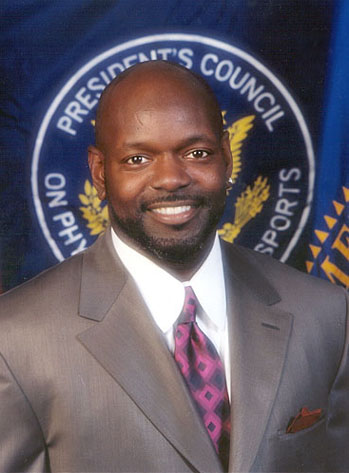
This guy:
Yes, Emmitt Smith. The same guy who has become a running joke on The Jimmy Kimmel Show for his mangling of the English language as an ESPN analyst. I'm guessing that if explaining the complexities of football is too taxing on someone's speaking skills, you might not want him to be person responsible for getting potential voters to understand the nuances of a complicated voting process:
KXAS in Dallas has footage from the rally on their Web site. I didn't actually hear him explain the voting procedures, but still, it's fascinating. Let's make this a game - see how many grammatical errors you can catch! My favorite is Smith saying that "this man is straightforward, he's serious about his business, and he know what he has to do." The point where he thanked "Mr. Barack..." is a close second.
With the support of someone "as sharp as a whistle" as Smith, maybe Obama can "blowed out" Clinton and put a stranglehold on this campaign.
Did you enjoy your President's Day weekend vacation? I enjoyed me the hell out of mine. As fknmclane mentioned earlier, we got together with a group of our RBI Baseball friends in my hometown of Los Angeles this past weekend. It was, to put it mildly, a lot of fun. I really can't describe most of what was said or done for the sake of common decency, but I will say that if any friends or family members of deceased child star Jonathan Brandis were within earshot of Rusty's Surf Ranch in Santa Monica, I sincerely apologize.
This weekend was also great, because it was the Daytona 500. In terms of excitement, I'd give this year's race a solid B+ rating. Nobody finished the race upside down and on fire, but the final 40 laps or so had a lot of drama and tension. Now is probably a good time to look back at some of the key points from my pre-race primer to see where I was a genius and where I was a complete idiot.
The Car of Tomorrow/The New Car/That Thing They Drive In: Pre-race, there was a lot of concern about how the New Car (formerly The Car of Tomorrow, err, yesterday) would handle in a restrictor plate race. Would it discourage pack racing and bring back the Slingshot? Would it be woefully squirrelly in traffic and cause several huge accidents? Would it come with XM or Sirius?
In retrospect, the New Car worked at Daytona. If anything, the large rear spoiler helped several drivers (notably Kurt Busch early) save the car after getting loose, where with the old car, they probably would have triggered a multi-car accident. And the racing was consistently entertaining all race long (a race that was relatively quick, timewise, because of the lack of cautions), with 49 lead changes (compared to just 13 last year).
Should we expect this every week? Let's wait and see how it handles at a mid-size oval like California Speedway this week. As Winston Wolf might say, let's not go around sucking each others...umm...private areas...just yet.
The Rick Hendrick Experience: In short, it wasn't good. Of the four Hendrick Motorsports drivers, only Dale Earnhardt Jr. finished in the top 25. His other three teammates (Jimmie Johnson, Jeff Gordon and Casey Mears) had various mechanical problems, pit problems and/or crashes that relegated to the bottom half of the final race standings.
Oh, What a Near-Miss Feeling...Toyota!: To say that this weekend was a bit bittersweet for Toyota is an understatement. Tony Stewart won the Nationwide race on Saturday driving a Toyota, with Joe Gibbs Racing teammate Kyle Busch finishing second. Then, in the big race on Sunday, Toyotas lead 138 of the 200 laps...but not the one that matters. Still, it's a long, long way from last season, when Toyota was struggling to get any of their drivers in the field, much less make them competitive.
And oh yeah, Toyota also won the Craftsman Truck series race with Todd Bodine on Friday. Which basically is just an excuse for me to post this video of a bad, bad crash from the race. Everyone walked away unharmed:
Busch vs. Stewart, Round Whatever: In what had to be delicious ironing for Kurt Busch, he was able to act as a drafting partner to help Penske teammate Ryan Newman pass Tony Stewart on the final lap for the win, after Stewart chose to not block Newman by staying in the high line, instead ducking down to the low side in hopes that his teammate and Kurt's brother Kyle would help him out. But Kyle was too far back, and by the time he got to Stewart, the damage was done.
And give Kurt Busch some credit for not gloating about it after the race. It did show some class. Although the guy did have surgery one off-season to have his ridiculous jug ears pinned back, which is actually somehow a step below Charlie Weis' gastric bypass in my book.
Remember a few years ago, when the US was turning into NASCAR NATION(tm)? How the media convinced us that, within the next two to three years, NASCAR was going to be part of the average sports fans' lives just as much as the NFL, NBA or MLB? That NASCAR had crossed over from a highly successful niche sport to the "mainstream"?
Yeah, weird, right?
The simple fact is that, as we approach this Sunday's 50th running of the Daytona 500, NASCAR is still a niche sport appealing to a select subset of the population. Granted, it is more popular than it ever has been, and that "niche" is one that most other sports (say, the NHL) would slice their own carotid arteries for. (Editor's note: Too soon?) People like Jeff Gordon, Dale Earnhardt Jr. and Tony Stewart aren't just drivers - they are brands, packaged and sold to willing consumers. Even if you don't watch NASCAR, you know the drivers and their ready-made "personalities", and Madison Avenue thinks that this will lead to you buying products because of them.
The majority of the NASCAR story has less to do with racing and more to do with marketing, advertising, TV ratings...all of the "behind the scenes" stuff that writers like to write about, because it gives them a chance to show their "expertise" in their subject, and talk about "real world" stuff like "big business" so they can pretend that their beat is about something tangible and real and not writing about people going around in a circle really fast.
But what about the racing - you know, the thing that is supposed to be the big draw? For millions of fans, this weekend is their one time to experience NASCAR - they might watch this weekend because they know it's the "Super Bowl of stock car racing" and then not watch another race the rest of the season. If NASCAR is lucky, it's a great race with a dramatic crash, and maybe a spectacular crash that everyone walks away from. If NASCAR is incredibly lucky, that all happens at once, like last year:
So if this is the only NASCAR race you're planning on watching this year, allow me to give you a primer on a few pre-race storylines to keep your eye on (basically, the things that Fox will be drilling into your head all race long):
The Car of Tomorrow Never Knows: Last year, NASCAR began phasing in the Car of Tomorrow at select races in the second half of the season. This is the first time it will be used in the Daytona 500. What is the Car of Tomorrow? It's like an old NASCAR car, except boxier and slower. (Which is a weird way to think of "the Car of Tomorrow" I always pictured jet packs, and being able to take a nap in the back while the new "cruise control" steers you to your destination.) The idea of the COT (a lousy acronym for what you would probably want to portray as a sexy, sleek race car) was two-fold: reduce costs and increase safety.
In practical purposes, the COT reduced the impact of aerodynamics on the car (think about the difference between an airfoil going through a jetstream versus a brick). Which in theory is great, because that lessened the "all in a line" style of racing where no one dared jump out to pass for fear that they would lose the draft and shuffle back 30 spots. The reality is that a lot of drivers complained that the COT was "difficult to drive" or "sucked." The essential complaint was that the lack of aerodynamics made it tougher to drive side-by-side, since you could get a lot of "dirty air" and go all over the place.
What does this mean for Sunday? Wait and see. We learned something from the exhibition Budweiser Shootout this past Saturday night: you can pull a "slingshot" and pass a group of drivers - essentially shooting out of the draft to gain momentum on a pack of cars long enough to pass and then get ahead and back in line. We'll know more after the qualifying Duels on Thursday about how the cars react in long stretches with 20 or more car fields. I'm cautiously optimistic that the racing will improve throughout the 200 laps, and break from the format that's plagued NASCAR in recent years: nothing for 125 laps, big crash, nothing for 50 laps, then racing starts with 25 laps to go.
The Rick Hendrick Experience: There is no doubt that Hendrick Motorsports is the dominant force in NASCAR today. With Jeff Gordon and Jimmie Johnson, his drivers have won two of the last three Daytona 500s (six overall for his team), and Johnson and Gordon finished 1-2 in drivers points last season. Add former Daytona 500 winner Dale Earnhardt Jr., and there is no question that this is the team to beat this year - especially since Hendrick Motorsports clearly had the best COT program last season. Have the other teams caught up?
Toyota in NASCAR: Turning Japanese? - Toyota's first season in the Sprint Cup last season was anything but smooth. Because their marquee team (Michael Waltrip Racing) was new, they weren't automatically in the field and had to race their way in (and frequently did not). And even when Toyotas did race, the results were spotty at best: two poles, one Top 5 and six Top 10 finishes all season. Not unexpected, but disappointing.
But the off-season brought a savior in the form of Joe Gibbs Racing. Sick of being the second or third team in the Chevy stable, JGR decided to defect and become the lead team for the Toyota brand, bringing two drivers who made the Chase last year - Tony Stewart and Denny Hamlin. There was no question that this was a coup for Toyota - it meant instant credibility, and the other Toyota teams would benefit from the expertise, knowledge and resources that JGR could contribute to making the Toyotas more competitive. For JGR, it's definitely a gamble to go with a manufacturer that is unproven at NASCAR's highest level. But no one questions Toyota's commitment, and they've become dominant in the NASCAR truck series.
I find it interesting to re-read articles from several years ago about how NASCAR fans would never embrace Toyota "invading" their All-American racin'. Frankly, it was a lot of garbage by sportswriters who don't understand NASCAR fans, continually underestimate their intelligence, and who probably watched "Gung Ho" too many times in HBO in the 1980s (when it seemed to run on a 24-hr loop with "Rad" and Romancing the Stone"). Just as many NASCAR fans drive Toyotas and Fords or Chevys (and if sales numbers are to be believed, probably more). Hell, more NASCAR fans probably work at a Toyota plant in the US than at a Ford or Chevy plant in the US. NASCAR fans are savvier than you think.
Stewart vs. Busch - I Couldn't Think of a Cute, Music-Related Title: When the two most hot-headed drivers in NASCAR keep wrecking each other, things are going to get ugly. Last year, they wrecked each other out of the 500 when they probably had the two best cars. Then later in the year in Dover, Busch decided to "buzz" Stewart's car after an on-track incident by rubbing into him in the pits, a stupid and dangerous move that could have caused an innocent crew member to get injured. NASCAR docked Busch $100,000 and 100 points for that.
So what happened in practice this week? Yup, Stewart and Busch wrecked in practice, with each side having a different story of what happened. Busch retaliated by again banging Stewart's car under caution (this time on the track), while Stewart blocked the entrance to pit lane to annoy Busch. This got them both hauled into the NASCAR hauler for a lecture by the brass, where things remained heated and Stewart may or may not have (depending on who you believe) socked Busch square in the nose.
The upshot? NASCAR, following an off-season edict to let drivers "show more emotion," responded with a slap on the wrist - six race probation for each driver. Needless to say, if they are battling for position on Sunday, it's going to be really interesting. After all, it was a fistfight that brought NASCAR truly out of the South and into the mainstream almost 30 years ago...